
A Conversation With a Student That Turns Into New Knowledge
How open dialogue between teachers and students creates two-way learning‚ boosts students' self-worth and builds a real learning community.
The Difference Between Listening and Teaching
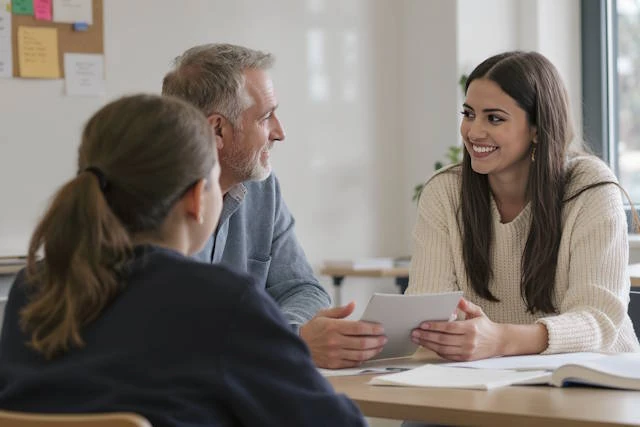
In a system based on passing knowledge from the top down‚ it sometimes seems that the teacher holds the truth and the student is there to learn. But the moment real listening takes place‚ a temporary equality emerges in which both sides learn. A student who voices an opinion‚ asks a question or pushes back forces the other side to sharpen their positions‚ examine their teaching approach and find more precise words. This kind of listening is not just a teaching technique - it is a way of thinking. It lets the teacher see reality through young eyes‚ and lets the student feel that their voice changes something real.
Conversations That Lead to Mutual Learning
Many classroom conversations start with an academic subject but quickly drift into questions about life itself. A small question like "Why does this even matter?" can turn into a discussion about meaning‚ values and choices. In such cases‚ it is not only the students who learn - the teacher also comes away with new insights. When the conversation opens up‚ knowledge no longer belongs to one person. It develops and takes shape within the dialogue‚ with every participant contributing their own unique point of view.
The Power of Simple Questions
Students' questions sometimes expose blind spots that weren't visible before. They force you to slow down‚ think differently and phrase answers that don't rely on habit. Even questions that seem "naive" carry power‚ because they come from genuine curiosity rather than a need to impress. These questions are a reminder that learning begins with doubt‚ not with absolute knowledge. Every time a student asks "How do we know?" or "Who decided that's true?"‚ a door opens to living‚ authentic learning.
Choosing an Open Attitude Toward Changing Knowledge
Knowledge is not fixed. It changes with time‚ with culture and with points of view. A conversation with a student can shed light on new sides of a topic that seemed closed. Suddenly an example from their personal world appears‚ a life experience or a link between different fields - and all of these give the material a new dimension. Real learning happens when there is a willingness to change our minds‚ even if we are the ones who are supposed to "teach". Once you understand that knowledge is an open field rather than a closed system‚ fertile ground for mutual growth is created.
How Conversation Affects Students' Sense of Worth
When students feel that their thinking is given real room‚ they are filled with confidence. Knowing that the teacher truly listens to them rather than assuming in advance what they will say gives them a sense of worth and partnership. The conversation becomes a space where everyone can speak up‚ even if their view is different or surprising. That sense of worth boosts the motivation to learn and connects students to the subject not only through knowledge but through the personal meaning they find in it.
Learning as a Human Act‚ Not a Technical One
The education system sometimes tends to measure outcomes‚ grades and achievements. But one honest conversation can create learning that cannot be measured. It changes perceptions‚ strengthens empathy and fosters critical thinking. Real learning is not just memorizing facts but a deep understanding of human connections. Through these conversations‚ a sense of mutual responsibility develops - a teacher who feels the need to answer precisely‚ and a student who feels their question deserves an answer.
The Place of Mistakes in the Learning Process
Conversation allows mistakes to become a natural part of learning. When there is no fear of getting it wrong‚ a creative environment emerges in which people can think out loud‚ experiment and weigh options. A student who makes a mistake in a question or an answer gets others thinking‚ and sometimes it is precisely that mistake that reveals a gap in the group's overall understanding. Instead of fearing criticism‚ dialogue encourages discovery. In this way‚ learning shifts from a process of correction to a process of exploration.
How Listening Shapes a Teacher's Identity
Teachers who allow themselves to have real conversations with their students rediscover the essence of their profession. Every such conversation reminds them why they chose to teach in the first place - not to dictate but to inspire. Through dialogue‚ they discover that they too are learning‚ updating and changing. In this way‚ the teaching role becomes less hierarchical and more human. The teacher is not the "owner of knowledge" but a partner on a journey of discovery.
Conversations as the Foundation of a Learning Community
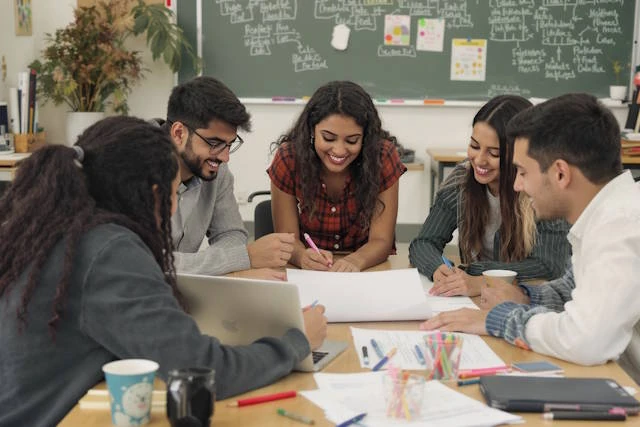
When a culture of listening and dialogue takes root in a school‚ a true learning community is created. This is not only about the relationship between teacher and student but also among the students themselves. Such conversations teach how to listen‚ wait and build ideas together. They develop not only intellectual understanding but emotional and social understanding as well. A school that encourages open dialogue raises people who understand that knowledge is not a competition but a shared space.
The Link Between Free Conversation and Inspiration
There are moments when a simple conversation between teacher and student changes the whole atmosphere. One word‚ a personal story or a thought spoken at the right time can become the spark that leads to a project‚ an idea or a new line of inquiry. Inspiration is not born from instructions or curricula but from the moments when someone truly listens. In such moments‚ a sense of human connection arises that reminds us that learning is‚ first and foremost‚ a relationship.
Summary
A conversation with a student can be much more than an exchange of words. It can become a moment when knowledge changes and real learning happens in both directions. Within this dialogue‚ new ideas are born‚ curiosity is renewed and an understanding emerges that learning is not a one-sided act - it is a system of relationships‚ thought and listening. The more openness there is to hear and be heard‚ the more a space is created in which every conversation is an opportunity to discover something new about the world - and‚ through it‚ about ourselves.