
Group Learning That Gives Birth to Creativity
How group learning fuels creative thinking - through diverse viewpoints‚ real listening‚ a safe space to share ideas and shared emotion.
The Power of Diverse Thinking
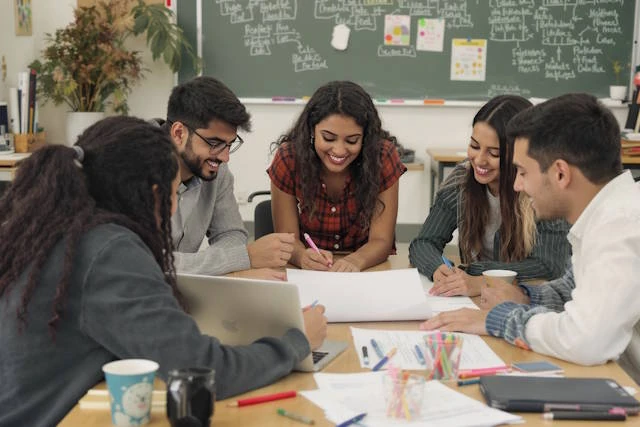
A group that is diverse in interests‚ background and ways of thinking makes it possible to see one subject from many angles. What one person sees as a problem‚ another may see as an opportunity. The meeting of different perspectives forces each participant to step out of their usual pattern and think differently. When different people speak the same language of curiosity‚ a richer kind of learning takes place - not only about the subject itself‚ but also about the possible ways of thinking. It is a process in which human interaction becomes a tool for developing shared intelligence.
Listening as the Basis for Creating Ideas
In group learning‚ the key to creativity is not necessarily talking but listening. When there is real listening‚ an idea that is tossed into the air does not end with the words‚ but keeps rolling and growing. One person adds another thought‚ someone else shifts the point of view‚ and a third connects everything into a new insight. In this sense‚ listening is what allows collective thinking to take shape. It brings different parts together into a new whole‚ where it is no longer possible to tell who the idea really belongs to - and it becomes a shared asset of the whole group.
A Safe Space to Think Freely
For real creativity to emerge‚ there must be a space where there is no fear of making mistakes. A group that allows experimentation‚ exploration and error is a group that encourages intellectual freedom. When people feel comfortable saying "I am not sure" or "I have a crazy idea"‚ they are in fact opening a door to new possibilities. The greatest ideas sometimes grow out of the simplest remarks - as long as the environment respects the unexpected too. This sense of security is what allows people to truly bring themselves‚ without fear of criticism.
Collaboration That Develops Critical Thinking
Creativity is born not only out of agreement but also out of productive disagreement. Within a group‚ opposing views force participants to re-examine their arguments. When the discussion is driven by curiosity rather than conflict‚ deep learning takes place. The critical thinking that emerges in such a process makes it possible to refine and sharpen ideas. The group discussion turns from an arena of arguments into a laboratory of ideas‚ where every objection is examined not in order to win but in order to understand better.
How Group Structure Affects Creativity
A group has its own pace and dynamics. Sometimes a natural leader steers the discussion‚ and sometimes it is the quiet ones who come up with the most innovative ideas. Managing the group structure well - keeping things equal‚ rotating roles and giving every voice a say - allows for more balanced learning. The more flexible the structure‚ the more creativity flourishes. The group learns to work together not through hierarchy but through intellectual partnership.
How Emotion Shapes the Group Creative Process
Group learning succeeds when it touches the emotions too. A sense of belonging‚ enthusiasm or shared curiosity makes the process more human. Positive emotions open up thinking and increase the willingness to take risks. When the atmosphere in the group is supportive and open‚ ideas are born almost by themselves. An emotional connection between participants turns learning from an educational task into an experience of growth.
Choosing a Collaborative Approach in Modern Learning
In a world where knowledge is available to everyone at the click of a button‚ the value of group learning lies in sharing rather than in accumulating information. When a group learns together‚ it develops skills that are essential for the new era - teamwork‚ systems thinking and the ability to communicate with different opinions. The collaborative approach teaches that knowledge is not personal property but the product of constant interaction. It is a mindset that prepares participants not only for the academic world but for life itself.
Group Learning in the Digital Age
Technology now makes it possible to learn in groups across borders. Online study groups‚ forums and knowledge communities have become spaces where ideas are born and change at a fast pace. The same basic principle applies here too - dialogue that gives rise to creativity. But the challenge of the digital age is to preserve the humanity of the conversation. That is why‚ even in virtual spaces‚ it is important to keep listening‚ mutual respect and room for silence between replies. This is what makes real learning possible - learning that is not only technological‚ but also emotional and social.
How Group Learning Shapes Personal Identity
The group is not only a tool for learning but also a mirror. Each person discovers parts of themselves in it through others - their communication style‚ their patience‚ the limits of their ego and their ability to cooperate. This process builds a learner's identity that understands personal knowledge grows precisely when it is shared. Each person becomes a link in a larger chain‚ where their contribution affects all the participants. This creates a deep sense of meaning that goes beyond academic achievement.
The Group as an Engine of Ongoing Inspiration
When a group works together over time‚ it develops a shared language‚ inside jokes and a unique working rhythm. This is a state in which creativity becomes a habit. Ideas keep developing outside study hours too‚ in chance meetings or side conversations. Every new meeting stirs up shared memories and sparks fresh ideas. The group itself becomes a source of inspiration‚ not only for its members but also for the wider community around it.
In Conclusion
Group learning is much more than a way of acquiring knowledge. It is a human process that nurtures listening‚ emotion‚ critical thinking and creativity. Within a group‚ people learn to see beyond themselves‚ join forces and create ideas that none of them could have invented alone. It is learning based on connection - between minds‚ between emotions and between different worlds. When a group works in true harmony‚ it proves that learning and creating are not separate activities‚ but two sides of the same breath.