
A Daily Routine That Gives Children a Sense of Security
A steady yet flexible daily routine helps children feel safe‚ build independence and trust the adults around them.
The Link Between Order and Emotional Security
Many parents find that when there is a fixed daily schedule‚ their children are calmer. This happens because a child's brain develops within a sense of certainty. When it is clear when they go to bed‚ when they eat and when there is time to play‚ the child feels that the world around them is stable and that the adults are in control. This feeling creates inner security and frees the child for emotional growth and learning. Order does not restrict - it soothes‚ because it reduces the unknown.
Routine as a Foundation for Independence
When a routine repeats itself‚ the child learns to predict the future and to take an active part in it. They know what is expected of them and when‚ and they develop a sense of self-control. Children who know their daily schedule are able to get organized on their own‚ understand what they contribute to others and feel that they belong. This independence does not come at the expense of security - on the contrary‚ it is built on it. A steady routine gives children the confidence to try‚ make mistakes and learn‚ knowing that the framework around them will stay the same.
The Emotional Value of Daily Rituals
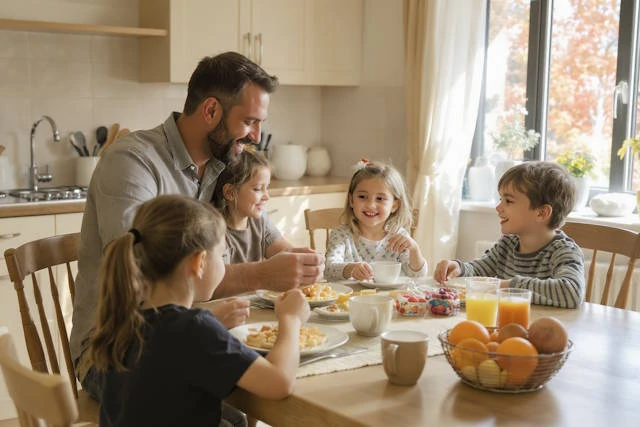
A routine is made up not only of hours and tasks but also of small rituals that repeat themselves. A bedtime story‚ a family dinner or a regular hug before leaving the house - all of these are emotional anchors that strengthen a sense of belonging. Children do not remember whole days but moments that give them a feeling of love and security. Such rituals are not just nice - they build the child's inner world and teach them what human stability means.
A Flexible Routine That Respects the Child
Despite the importance of order‚ it is worth remembering that routine is not rigidity. Children change - sometimes they are more tired‚ sometimes more curious. A healthy routine is one that includes flexibility: it leaves room for surprises‚ changes and spontaneous laughter. When a child knows that the adults around them are stable but also attentive‚ they feel that their emotions are respected. This creates an environment in which consistency can be maintained without stifling spontaneity.
Parents as Personal Role Models
A routine that gives children a sense of security starts with how the adults behave. When children see their parents managing their time calmly‚ keeping their promises and staying consistent‚ they internalize these values themselves. On the other hand‚ when everything changes frequently‚ a sense of insecurity develops. Parents do not need to be perfect - it is enough for them to keep to a consistent pattern that shows children that even in changing situations there are principles that hold the home together.
Routine as a Basis for Open Communication
When the daily schedule is clear‚ communication at home improves as well. A routine prevents unnecessary conflicts because children know what to expect. Beyond that‚ it creates a quiet space in which to talk. When there is order‚ there is room left for questions‚ sharing and laughter. Children learn that between dinner and bath time there is time to talk‚ and they understand that their parents are available to them. This consistency builds trust - an essential foundation for any family relationship.
Restoring a Sense of Stability During Change
Family life is full of changes - moving house‚ a new sibling‚ a new kindergarten or school. In such periods‚ the routine is what keeps the ground steady. Even when everything is changing‚ familiar daily activities - such as a regular dinner or a set bedtime - remind the child that the foundation remains the same. This provides a sense of security even when reality is shaky. The routine becomes a familiar language‚ a way of telling the child: "We are here‚ everything is okay".
Balancing Freedom and Structure
Children need two complementary elements - freedom and structure. Without freedom‚ they feel stifled; without structure‚ they feel lost. Routine is what connects the two. It provides clear boundaries but also allows children to express themselves within them. When they know what is allowed and what is not‚ when it is time to play and when it is time to sleep‚ they feel safe to try and experiment. A balanced framework leaves room for creativity alongside emotional security.
Adapting the Routine to the Child's Age
Needs change with age‚ and the routine should change accordingly. Babies need a clear routine to feel protected‚ toddlers enjoy repeated rituals and teenagers need a little more freedom within the framework. A smart routine recognizes the developmental stage and allows the child to grow within it. When parents pay attention to these changes‚ the routine does not feel like coercion but like a loving adjustment that respects each child's personal pace.
In Conclusion
Routine is not just a matter of convenience - it is an expression of love‚ responsibility and stability. It gives children a deep sense of security that stays with them into adulthood and teaches them what consistency is and what commitment means. Within a steady order there is room for growth‚ play and discovery‚ but always from a stable base. In the end‚ children who grow up within a warm and balanced routine learn that the world may change‚ but they always have a safe place to come back to.