

Two in a Bed‚ Two Sleep Habits: Small Fixes for a Better Night for Both of You
Two duvets‚ pillows matched to each sleep position‚ focused reading light and a motion-isolating mattress help couples sleep well in one bed.
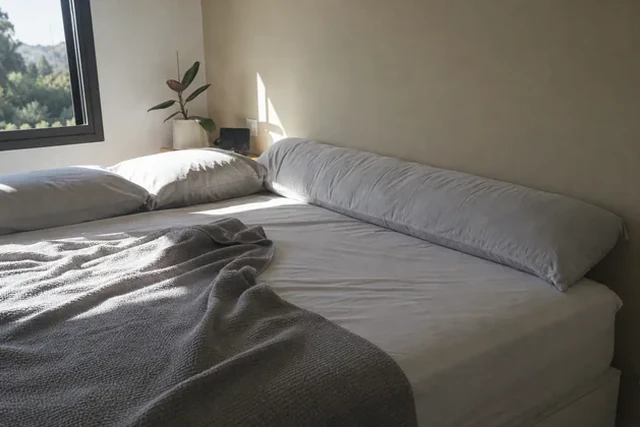
The solution does not have to be separate beds. In most cases a few small changes are enough to let each person get what they need on their own side of the bed without disturbing the other. Someone who sleeps on their side and likes to hug something‚ for example‚ can sleep with a long body pillow that supports the back and knees and replaces the urge to cling to their partner in the middle of the night. Here are a few more solutions couples discover once they start taking each other's sleep habits seriously.
Two Duvets Instead of One
One of the simplest and most effective solutions is to give up the double duvet and switch to two single ones. That way each person chooses the warmth that suits them‚ and there is no more tugging at the covers in the middle of the night. Whoever runs hot can choose a thin cotton duvet‚ and whoever feels the cold can choose a down one. In the Scandinavian countries this has been the norm for decades‚ and many couples who have tried it say they cannot understand how they slept any other way before. If the look of a uniform double bed matters to you‚ you can spread a single bedspread over both duvets during the day.
Pillows That Match Your Sleep Position
A back sleeper needs a relatively low pillow that supports the neck without pushing the head forward. A side sleeper needs a higher‚ firmer pillow that fills the gap between the shoulder and the head. There is no reason for two partners to sleep on the same pillow just because they were bought together as a set. Each of you should choose a pillow according to the position you sleep in for most of the night. Side sleepers will also benefit from a pillow between the knees or a long body pillow‚ which keeps the hips aligned and eases pressure on the lower back.
Light and Reading Without Disturbing
When one of you wants to read and the other wants to sleep‚ an ordinary bedside lamp lights up the whole room. A small reading lamp with an adjustable arm that lights only the book‚ or a lamp that clips onto the book itself‚ lets you read without waking your partner. An eye mask is another solution for anyone sensitive to light‚ and it also helps in the morning if one of you gets up early and opens the shutters. It is also important to agree on a lights-out time so the reading does not stretch until two in the morning.
Movement and Noise
Someone who tosses and turns a lot can wake their partner with every move‚ especially on mattresses with connected springs. A mattress that isolates motion‚ or two separate mattresses inside one double frame‚ reduces the problem. Snoring is a different story and sometimes calls for a medical check‚ but in mild cases a change of position or a higher pillow helps. Soft earplugs are a good temporary solution for the partner who wakes up from the noise.
Different Sleep Schedules
When one of you gets up at five for work and the other sleeps until eight‚ the morning becomes a point of friction. It helps to lay out clothes and a bag the night before‚ set an alarm that vibrates on a wristwatch instead of ringing through the whole room‚ and get dressed in another room. In the evening too‚ whoever goes to bed late can get ready outside the bedroom and come in only when ready to sleep.
Summing It Up
Different sleep habits are no reason to sleep in separate rooms. Two duvets‚ pillows that suit each of you‚ focused lighting‚ a motion-isolating mattress and a little planning of mornings and evenings let you both sleep well in the same bed. It is worth sitting down together for a short talk about what bothers each of you at night‚ because in most cases the solution is simpler than it seems.